


Volvo Truck NOx delete
Mochester App NOx delete solutions for:
How to get
1. Select a Service
Check available tuning solutions in the Mochester App for your truck.
2. Pay for Your Order
Top up your wallet on https://dl.ge/ for the amount of the chosen solutions.
3. Get Your Solution
Return to the Mochester App and get the solutions.




15+ Years of Experience
Professional ECU programming for commercial vehicles since 2009.

Official DrunkLab Software
Original engineering solutions developed by the DrunkLab team.

Fast Turnaround
Most tuning sessions are completed in 25 minutes or less.

Compatibility Table
Model | Type | Year | Adapter | Link |
|---|---|---|---|---|
D11 EPA10/US10 | Truck | 2010-2013 | RP 1210 | |
D13 EPA10/US10 | Truck | 2010-2013 | RP 1210 | |
D16 EPA10/US10 | Truck | 2010-2013 | RP 1210 | |
D11 EPA14/US14 | Truck | 2014-2017 | RP 1210 | |
D11 EPA14/US14 | Truck | 2014-2017 | VLOMINGO | |
D13 EPA14/US14 | Truck | 2014-2017 | RP 1210 | |
D13 EPA14/US14 | Truck | 2014-2017 | VLOMINGO | |
D16 EPA14/US14 | Truck | 2014-2017 | RP 1210 | |
D16 EPA14/US14 | Truck | 2014-2017 | VLOMINGO | |
D11 EPA17/US17 | Truck | 2017-PT | VLOMINGO | |
D13 EPA17/US17 | Truck | 2017-PT | RP 1210 | |
D16 EPA17/US17 | Truck | 2017-PT | VLOMINGO |
How to use the Mochester App
Download
Install and launch the Mochester App. Sign in using your dl.ge account and click Login.
Connect
Tap Start Connecting, follow the on-screen steps, and wait while your vehicle is identified. Click Next to load available tuning solutions.
Top-Up
On dl.ge, open Wallet, select WALLET TOP-UP, enter the required amount, complete the payment, then return to the Mochester App.
Proceed to tuning
Select one or more tuning solutions, click Next, confirm with your one-time password, and wait while the download completes and flashing starts automatically.
Processing
Wait until flashing is complete while monitoring the progress bar. A detailed report will be generated, and your selected features will be ready to use.

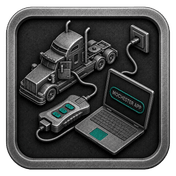


What is Volvo Truck NOx Delete with Mochester App (M4 App)?
Volvo Truck NOx Delete is a tuning solution that disables NOx sensor-related monitoring functions in the engine control system. Using the Mochester App (M4 App), truck owners can address NOx sensor faults, avoid power derates caused by sensor failures, reduce maintenance costs, and restore normal vehicle operation without replacing faulty sensors.
As the development of engine technology combined with new methods of fuel injection become more sophisticated, the effect of higher combustion temperatures leads to greater emissions of nitrogen oxides. Volvo truck manufacturers implement systems like SCR, DPF, and NOx sensors to meet certain environmental standards. These systems reduce NOx gas emissions and render them less harmful. That said, malfunctions/errors of NOX sensors may cause impairments/disruptions to truck operations. However, NOX sensor malfunctions can disrupt truck operations. Our Mochester Application helps avoid costly repairs and dealership visits to fix NOX sensor failure. It allows truck customization mechanisms on your Volvo truck.
About Mochester App (M4 App)
Using the Mochester 4 App, we can effectively disable the NOX sensor in the Volvo truck's engine control system. This tuning solution makes sure the truck doesn’t go into limited power or speed modes due to NOX sensor malfunctions. Moreover, trucks with NOX sensor deletions can still pass emissions checks, avoiding costly sensor replacements.
Regardless of the costs of maintenance and repairs, the disabled NOX sensors achieve the sensor failure drawbacks, and enhance the reliability of the vehicle. Such sensors are essential for emissions reduction and environmental compliance. It is important to balance these advantages against the environmental impacts and check that local emission standards are being adhered to.
Advantages and Disadvantages of the Volvo Truck NOx delete
Advantages:
- Deactivating NOX sensors eliminates the constraints of restricted power and speed.
- Maintain performance and reduce fuel consumption.
- No more pricey sensor replacements just to pass emissions tests.
- Reliability of the vehicle and costs of maintenance will improve.
Disadvantages:
- Possible impacts on the environment need to be taken into account.
Conclusion:
Volvo Truck NOx Delete with Mochester 4 App is Reliable and Cost-Effective when it comes to Maintenance.
FAQ
How to tune the Volvo Truck via the Mochester App (M4 App)?
What is Volvo Truck NOx delete?
Volvo truck NOx delete is when you take out the NOx sensors from the engine control system of a Volvo truck. Usually, this is done to deal with NOx sensor faults or errors that can happen as time goes by.
How does disabling NOx sensors benefit Volvo truck owners?
For Volvo truck owners, disabling NOx sensors eliminates the issue of the truck going into limited power or speed mode because of faulty NOx sensors. Reliability of the vehicle is improved and then the maintenance and repairs cost can go down.
How does NOX sensor deletion affect engine performance?
If NOX sensors are deleted, they will not affect engine performance, meaning performance will not be affected and you will get dependable and steady performance.
What happens when a Volvo truck NOx sensor fails?
When a NOx sensor fails, warning lights will illuminate, DEF consumption will increase, the engine will derate, limited-power mode will activate, and the ECU will log fault codes. It is possible that the truck will also experience a loss in performance until the problem is repaired.
Can a faulty NOx sensor cause engine derate on a Volvo truck?
Yes. Modern Volvo trucks use NOx sensor data as part of their emissions control strategy. When there’s a faulty NOx sensor or incorrect readings, derate modes activate reducing engine power and vehicle speed.
How many NOx sensors are installed on a Volvo truck?
NOx sensors give better efficiency and control of emissions with the help of the SCR system. Modern Volvo trucks have a total of two NOx sensors. One is located in front of the SCR catalyst and the second is located after the SCR catalyst.
What is a NOx sensor on a Volvo truck?
A NOx sensor in a Volvo truck is a device that monitors nitrogen oxide levels in the emissions and sends data the truck's ECU and SCR for emissions control.
Can a truck operate with a faulty NOx sensor?
Most of the time the truck would still be operable, however, the ECU could still activate some of its protective strategies such as limiting the truck's power or speed, or putting the truck into some kind of emissions derate mode.
How long does a Volvo truck NOx sensor typically last?
Typically a NOx sensor lasts 100,000–150,000 miles; however, some factors that might affect this include the condition of the fuel, how the vehicle was driven, and the health of the emissions system.
What causes Volvo truck NOx sensor failures?
Some common causes are sensor soot, sensor damage after prolonged exposure to high temperature, damaged wire, corrosion of connection, water damage, and sensor wear after prolonged use.
Can a defective NOx sensor have an impact on fuel consumption?
Yes. Bad NOx sensor readings can lead the SCR to improperly dose DEF. This can actually cause excessive DEF consumption and can lead to deterioration of operating efficiency.
Is the NOx sensor connected to the SCR and DPF systems?
Yes. The NOx sensor along with the SCR catalyst, the DEF dosing system, and the DPF, help monitor and control the emissions in the exhaust.
Can the Mochester App (M4 App) help with Volvo truck NOx sensor issues?
Yes. The Mochester App (M4 App) offers a solution that helps with faults in the NOx sensor and aims to bring the truck back to a regular working condition without having to visit the dealership.
Will replacing a NOx sensor always solve emission-related fault codes?
Replacing a NOx sensor alone will not necessarily solve the problem in a lot of cases which can be caused by problems in the SCR system, wiring problems, CSC communication problems, DPF restriction problems, and/or problems with SCR-DEF quality and/or SCR contamination which must be diagnosed before component replacement.